
If your PR report looks busy but your pipeline stays quiet, you’re tracking the wrong metrics. Traditional media clips and impression counts don't explain why sales conversations stall or why investors hesitate. It's time to focus on PR metrics that matter—buyer signals, investor confidence signals, and trust velocity—that actually move your business forward. This framework will show you how to hold PR accountable to real outcomes, not just noise.
Anti-PR
From Noise to Signals
To transform PR from a noise generator to a signal communicator, begin by addressing the frustration with vanity metrics. The goal is to shape how buyers and investors perceive your brand.
Frustration with Vanity Metrics
Are you tired of staring at media clips that make your brand look active but don't drive results? Many companies find themselves in this exact position, longing for more. Traditional metrics, like impressions and click counts, fail to capture the essence of true engagement. They create the illusion of success without the substance.
Imagine having a report filled with impressive numbers yet seeing no impact on sales or investor interest. That’s because those numbers don't translate to trust or credibility. Instead, they create a false sense of accomplishment. What you need are metrics that mirror actual progress, those that signal curiosity and confidence from stakeholders.
Shaping Buyer and Investor Perception
Your aim should be to influence how buyers and investors perceive your credibility. This is where the real value of PR lies. When you focus on perception, you shift from seeking attention to building authority. Buyers and investors aren't just looking for a flashy story; they want to see if you can deliver on your promises.
Start by identifying key moments when perception shifts. Does an article lead to more calls from interested buyers? Does a podcast engagement result in increased investor inquiries? These are the signals that matter. Your PR efforts should create a narrative that invites stakeholders to trust and invest in your journey.
Market-Response Indicators
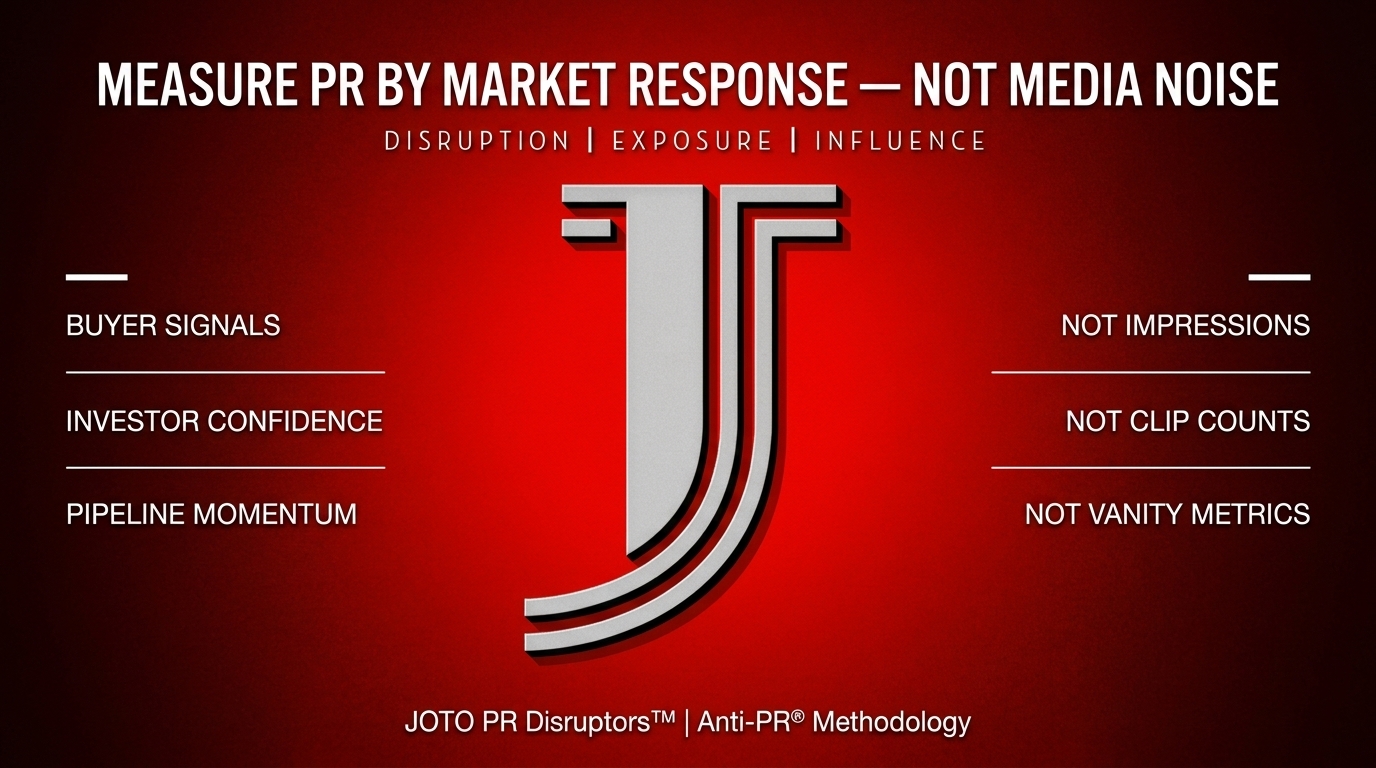
Once you've reframed your approach, focus on market-response indicators that reveal genuine interest and confidence from your audience.
Signs of Buyer Curiosity
Spotting buyer curiosity is crucial. It begins with understanding the subtle cues that indicate interest. Are you seeing more engagement on your social platforms? Are potential customers signing up for newsletters or requesting demos? These are signs that your message resonates.
One key metric is the increase in inbound inquiries. When potential buyers reach out, it shows your PR strategy is building curiosity. Another indicator is the quality of leads: are they better informed and more aligned with your ideal customer profile? These insights reveal how well your PR is sparking interest.
Building Investor Confidence
Investor confidence often hinges on how effectively you communicate your market position. Investors seek assurance that your company is not just a flash in the pan but a leader in its space. Your PR strategy should aim to establish this.
Regular updates that showcase growth, strategic partnerships, and industry recognition can bolster confidence. Investors are more likely to engage when they see a consistent narrative of growth and potential. These indicators act as a barometer for how your company is perceived in the financial community.
Credibility-Driven PR Framework
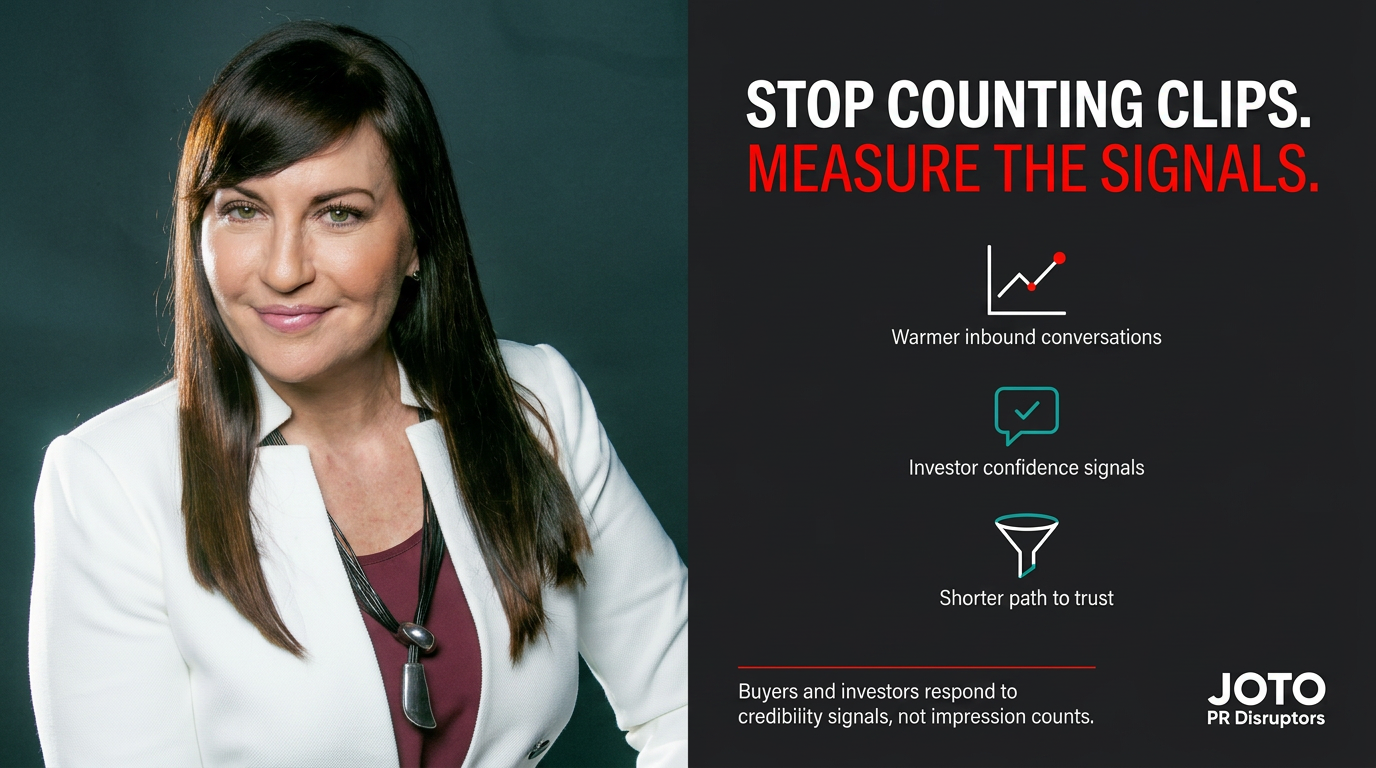
A credibility-driven PR framework aligns your efforts with business growth metrics. It ensures that your communications efforts aren't just about making noise but about creating meaningful progress.
Leading Indicators for Growth
Look for indicators that signal upcoming growth. These can include increased media mentions in reputable outlets, which often precede a rise in sales inquiries. Monitor how well your PR efforts translate into sales-cycle compression, where leads move through the pipeline more quickly.
Also, track the progression from marketing-qualified leads (MQLs) to sales-qualified leads (SQLs). This shift indicates that your messaging is not only reaching the right audience but also compelling them to take action. These are the metrics that matter.
Aligning PR with Business Metrics
Aligning PR efforts with business metrics means focusing on results that impact the bottom line. Start by establishing a clear connection between PR activities and sales outcomes. How does PR influence customer acquisition costs (CAC) or conversion rates?
The goal is to demonstrate that PR isn't just an expense but a vital part of your revenue strategy. This involves setting measurable objectives, like reducing CAC or shortening sales cycles. By doing so, you hold your PR accountable to the metrics that drive business success.
In conclusion, by prioritizing credibility over visibility, you'll move beyond vanity metrics and focus on the signals that truly matter. This approach empowers you to shape the narrative and influence the perceptions that drive real business outcomes.

Clip Counts Don’t Close Deals: Conference Season Exposes Vanity PR

The plainspoken scorecard for separating real PR influence from vanity numbers
No Comments Yet
Let us know what you think