
Glossy PR reports can make your team look busy while the market barely notices. You might be celebrating media placements, but is anyone actually changing what they believe or trust about your brand? Real PR moves public opinion and drives lead quality, sales velocity, and market adoption—not just vanity metrics. It’s time to stop confusing activity with influence and start measuring what truly matters.
Learn more about Anti-PR® by JOTO PR Disruptors™
The Illusion of PR Success

Many organizations celebrate PR wins by showcasing media activity. But is this truly success if the market remains unconvinced? Let's explore the misconceptions of reporting.
Understanding Vanity Metrics
Vanity metrics look impressive but lack substance. They often highlight the volume of coverage without indicating any real impact on the audience. While it feels good to see your name in lights, these metrics can be deceiving. They mislead you into thinking your PR efforts are fruitful when they might not be shifting public opinion or driving sales.
Think about it: a thousand mentions don’t matter if they don't convert into trust or influence. You need to focus on what truly matters—changing perceptions and boosting credibility.
The Gap Between Activity and Influence
Activity doesn't always mean influence. Many companies confuse being busy with being effective. Media placements can show effort, but are they influencing buyers’ decisions? The real question is whether your PR is altering market beliefs and trust levels.
Consider this: if your PR efforts aren't converting into sales or market adoption, then what’s the point? It's crucial to bridge the gap between mere activity and genuine influence. This makes your brand not only visible but also respected and trusted.
Measuring True Market Impact

To have a genuine impact, you need to focus on the right metrics. Let's delve into what truly signals credibility and builds trust over time.
Credibility Signals That Matter
Real market impact comes from credibility. But how do you measure it? Key indicators include third-party validations, expert endorsements, and increased brand trust. These signals show that your brand is not just known, but respected. They reflect your authority and thought leadership in the industry.
Moreover, credibility is currency. It wins over skeptical buyers and positions your brand as a leader. So, forget about the number of likes or shares. Focus on these trust-building indicators that actually influence decision-making.
Trust Building Over Time
Building trust is a marathon, not a sprint. It requires consistency and reliable messaging. Over time, credibility compounds, leading to stronger market influence. Trust is the foundation of any successful brand strategy. It’s what turns curious onlookers into loyal customers.
Every interaction, every message contributes to this trust-building exercise. It's about demonstrating reliability and authenticity in every piece of communication. When your audience trusts you, they’re more likely to choose your solutions over competitors.
Implementing Effective PR Strategies

Now that you understand what to measure, how do you implement these insights effectively? Enter Anti-PR®.
Anti-PR as a Game Changer
Anti-PR® redefines traditional strategies by focusing on measurable outcomes. Unlike typical PR, which often relies on flashy metrics, Anti-PR® prioritizes credibility and trust. This method uses crisis management principles to shape how the public perceives your brand, ensuring your efforts are aligned with business goals.
This approach not only alters perception but is also tied to revenue generation. By leveraging credibility, you can drive significant business outcomes and become a market leader. Anti-PR® isn't just a strategy; it's a paradigm shift.
Aligning PR with Business Goals
Your PR should not be a separate entity. It must align with your broader business objectives. This means linking PR efforts directly to sales goals, lead quality, and market adoption. When PR is aligned with what the business aims to achieve, it becomes a powerful tool for growth.
Consider viewing PR as an integral part of your business strategy. This alignment ensures every action taken in PR correlates with tangible business results. Therefore, it's not just about being seen—it's about being chosen and trusted by the market.
In conclusion, the days of relying solely on vanity metrics are over. With a focus on credibility, trust, and aligning PR with business goals, you can transform your PR strategy into a game-changer for your brand
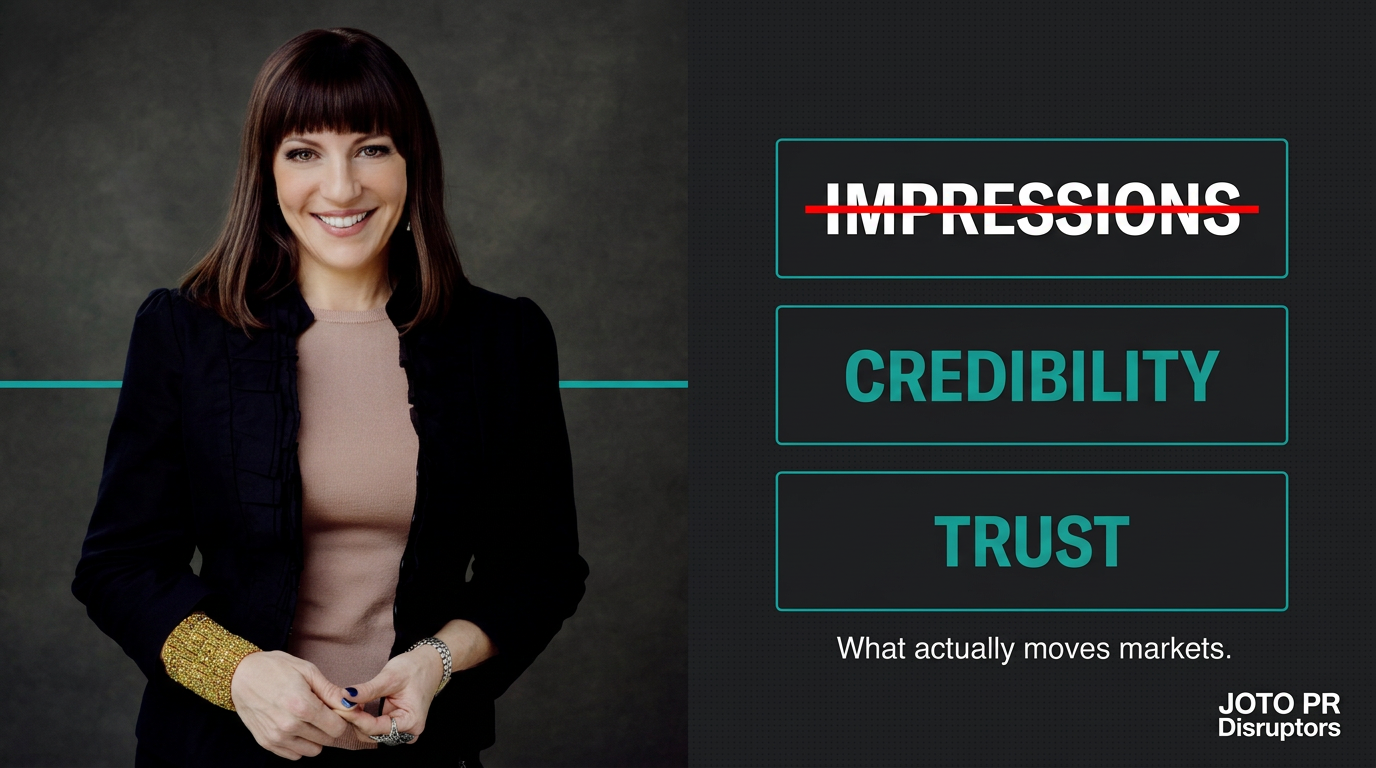
What Disruptive Companies Should Measure Instead of Impressions to Earn Real Market Influence
When PR Is Working: The Business Outcomes Disruptive Companies Should Demand

No Comments Yet
Let us know what you think