
Clip counts don’t close deals. You’ve seen the endless reports filled with media mentions that don’t move the needle. What really matters is credibility-based PR that builds trust, sharpens authority, and primes the market before buyers even raise their hands. This post breaks down why traditional PR metrics fail and offers a clear framework to measure what drives real growth in disruptive markets. Read on to judge PR by the signals that impact revenue, not just headlines.
Visit JOTO PR Disruptors for more insights into credibility-based PR.
Redefining PR Success
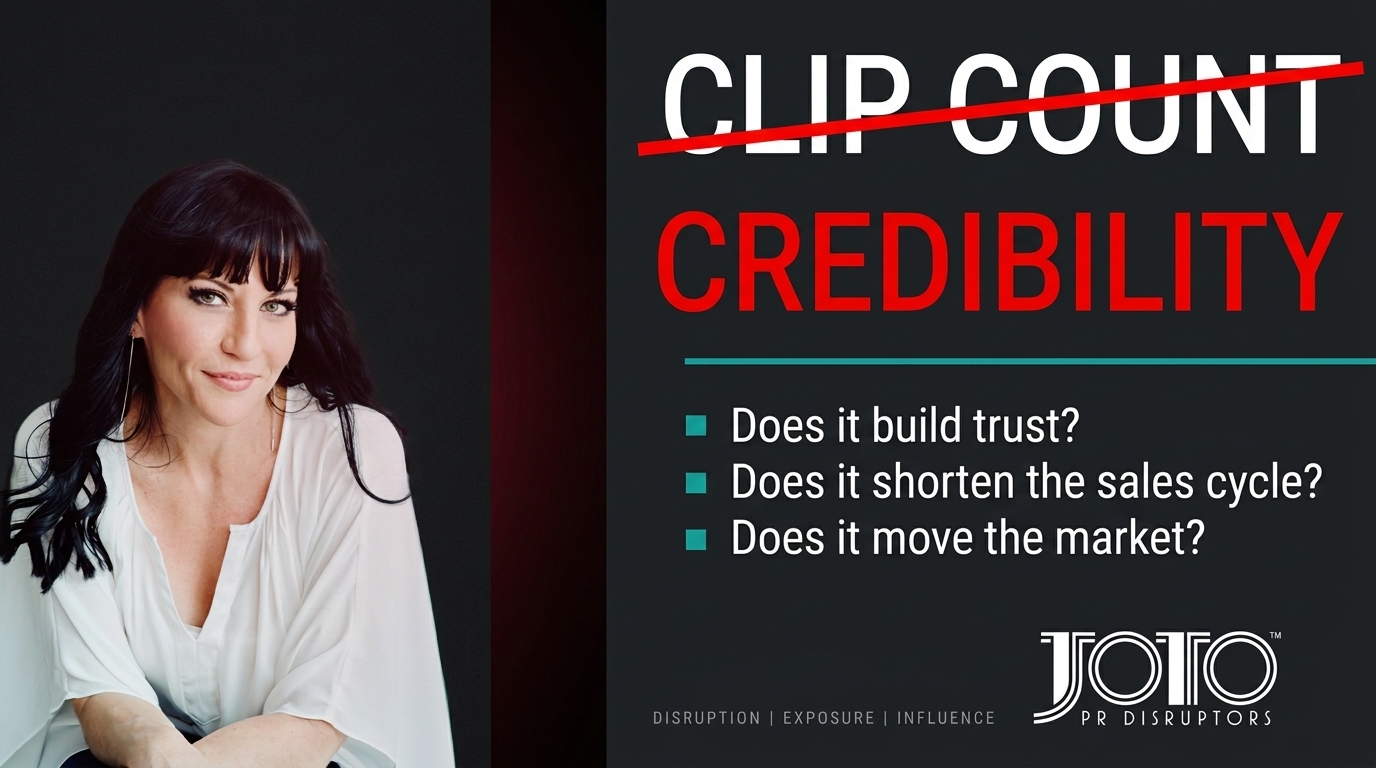
When PR is judged by clip count, the real value often gets lost. Instead, PR should build something more lasting: credibility.
Credibility Over Clip Count
Focus on what truly matters: trust and authority. Clip counts can show activity, but they don't guarantee influence. Credibility-based PR shifts the goal from mere visibility to earned trust. By prioritizing trust, your market presence becomes more impactful and lasting.
Empowering Market Perception
Think about the message you're sending. When perception aligns with credibility, your market sees you as a leader. Instead of chasing headlines, work on creating a consistent narrative that resonates with your audience. This approach strengthens your position and encourages market confidence.
Aligning PR with Revenue Goals
PR should not be separate from your business objectives. By aligning PR with revenue goals, you ensure that your efforts contribute to growth. This alignment involves using CFO-grade metrics to track how PR supports sales and reduces buyer skepticism.
Signals of Credibility-Based PR

Understanding the signals of effective PR can change how you measure success. Let's explore these indicators further.
Third-Party Validation in B2B
Third-party validation acts as a powerful trust builder. When industry experts or recognized platforms endorse your brand, it enhances credibility. Focus on securing product reviews, expert mentions, or awards. These validations help potential customers feel more confident in their decisions.
Executive Visibility and Thought Leadership
Establishing leaders in your industry involves more than just titles. It's about positioning them as trusted voices. By sharing expert insights through thought leadership content, such as articles or podcast appearances, executives can build authority. This visibility fosters trust and differentiates your brand from competitors.
Buyer Readiness and Sales Cycle Compression
When credibility aligns with buyer readiness, sales cycles shrink. A well-crafted PR strategy can reduce customer hesitation and speed up decision-making. By focusing on credibility, you equip your sales team with the trust signals they need to close deals faster.
Evaluating PR Through the Anti-PR Lens

The Anti-PR lens offers a fresh way to evaluate PR's effectiveness. It focuses on what truly drives business outcomes.
Importance of CFO-Grade Reporting
CFO-grade reporting translates PR metrics into business language. It connects PR efforts to financial outcomes, making them tangible. This approach aligns PR with business strategy, showing stakeholders how PR affects cost per acquisition and sales cycle duration.
Narrative Control and Reputation Management
Controlling your narrative is crucial in shaping public perception. It involves managing what is said about your brand and ensuring consistency across channels. Effective narrative control mitigates risks and builds a solid reputation that withstands challenges.
Tools for Growth-Stage PR Strategy
At the growth stage, PR tools must support rapid progress. These tools should focus on influencer engagement, podcast-driven thought leadership, and strategic media placements. By selecting the right tools, you enhance your brand's credibility and facilitate market leadership.
In conclusion, shift your PR focus from clip counts to credibility. By measuring trust, authority, and buyer readiness, you ensure your PR efforts lead to real business growth.
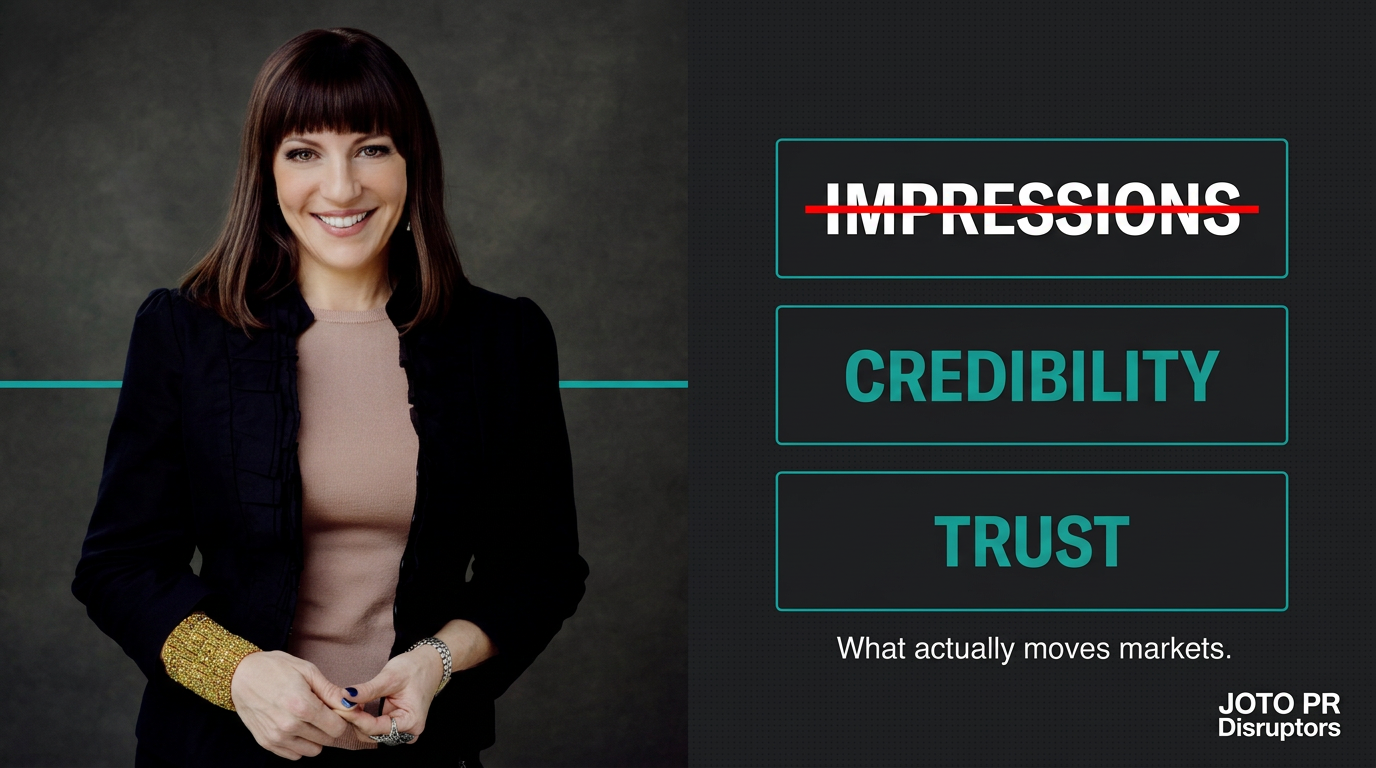
What Disruptive Companies Should Measure Instead of Impressions to Earn Real Market Influence
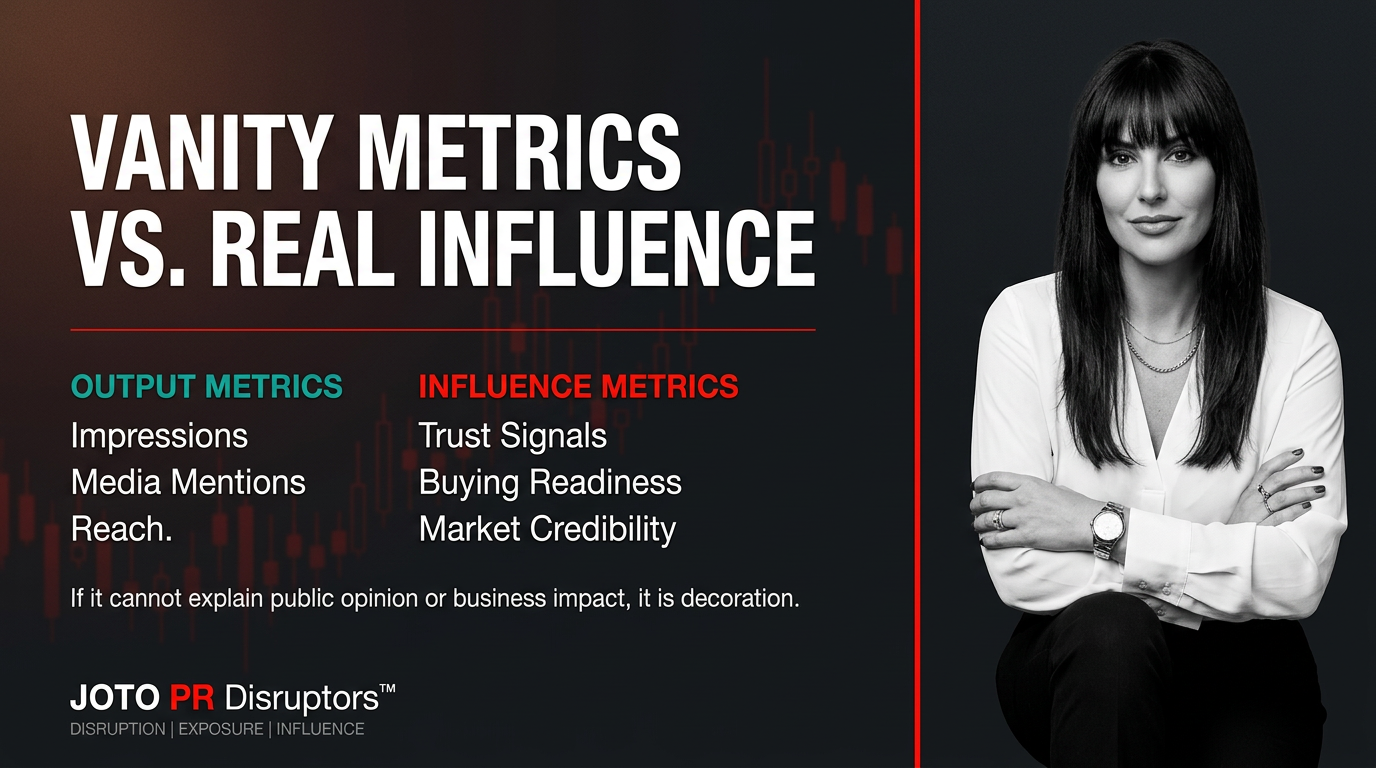
The plainspoken scorecard for separating real PR influence from vanity numbers

No Comments Yet
Let us know what you think