

Burger King made a mess and learned the oldest rule in digital comms since dial-up modems walked around the Earth: nobody reads the second tweet.
There are risky headlines. There are provocative campaigns. And there is posting "Women belong in the kitchen" on International Women's Day and trusting the internet to patiently wait (!) for the explanatory thread. "Internet" and "wait" have never been seen together successfully since burgers and fries started being paired.
(We think) Burger King UK's intent was not, in fact, to time-travel back into the age of American dining in the 50's (which they quickly achieved), filled with checkered floors, soda fountains and stereotypes.
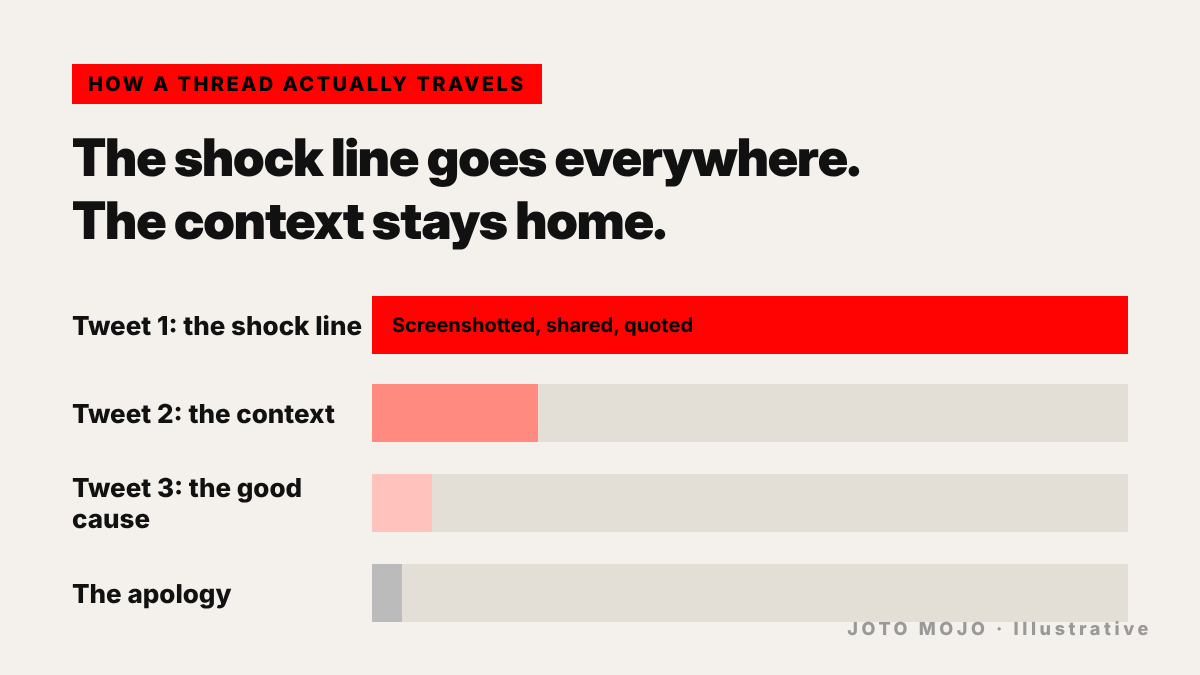
The campaign, held in 2021, was meant to promote a scholarship program supporting women pursuing culinary careers. The problem was that on X, then Twitter, the first line escaped the container, ran laps around the platform, and left the explanation several tweets behind.
Outrage Is Leverage, If You Engineer It
This would have worked if Burger King had engineered the outrage instead of being blindsided by it.
The line itself wasn't the problem—the lack of control was. If they had pre-seeded the full narrative with media, influencers, and owned channels before dropping the tweet... if the scholarship program had already been visible, validated, and circulating... if the "shock line" landed into an environment where the context was impossible to miss... then the backlash becomes fuel, not fire. Controversy isn't dangerous when you control the frame—it's leverage. But they didn't build the narrative first. They threw a match into a vacuum and hoped the explanation would catch up. It never does.
The Fail
The full message only made sense as a thread. Unfortunately, X is where context goes to die before you can say "would you like fries with that, sir?".
Burger King posted an opener, followed by clarifying tweets explaining that only a minority of chefs in UK restaurant kitchens were women and that the brand was launching a scholarship initiative to help change that.
Admirable goal. Catastrophic packaging. 90% of success is in the planning—NO PLAN.
People saw only the first line (probably in shares and screenshots), and the supportive message got smashed like a patty into what looked like misogyny-flavored onion rings. Media backlash followed. Content was deleted. An apology arrived (as late as a warm vanilla soft serve).
The internet did what the internet does best: judge at first sight.
Why It Blew Up
1. They built the idea for a thread on a platform that hates reading.
If your concept requires people to consume the whole sequence in order, you have already overestimated how online written content works.
2. The shocking line was more portable than the explanation.
The problem with a "gotcha, we're actually being progressive" format is that the gotcha travels faster than the progressive part.
3. They confused provocation with precision.
A message can be bold without being an invite to misinterpretation.
What They Should've Done
Here is the less combustible version of the same idea:
1. Lead with the actual point.
"Only 20% of chefs in UK restaurant kitchens are women. We want to change that." As clear as a Whopper order.
2. Introduce the program.
Now the audience knows the mission before the headline tries to get cute.
3. Bait is not earned attention.
There is a difference between being clever and making your comms team spend the afternoon writing an apology (we actually do not appreciate having to say I told you so).
You Can Steal This
Before posting anything "provocative," ask:
- Would this still work as a screenshot with zero context?
- If only the first line gets shared, do we survive?
- Are we creating intrigue, or just volunteering for a pile-on?
- Is the joke smarter than the backlash will be?
If the answer to any of these is slightly close to "hmm," just delete and get back to the drawing-writing-cutting board.
JOTO MOJO Time
Burger King did not fail because the cause was wrong. They wrapped a good intention inside a format optimized for outrage, decontextualization, and bad-faith virality.
Not every sharp line is worth the risk. Not every attention grab is strategic. And nearly no audience is going to stick around for tweet number two, three, or your very sincere explanation written after the fire has already started.
…and we'll tell you whether your next campaign is built to land or built to become the theme of our next newsletter.
Because when your narrative is right, deals move faster. We've helped companies close their biggest clients in as little as 90 days.

Battery-Free Technology Could Render Dangerous Toys a Thing of the Past--Why Laws Alone Aren't Keeping Kids Safe

Wrong Newsletter Subscribers Are Quietly Killing B2B ROI

No Comments Yet
Let us know what you think